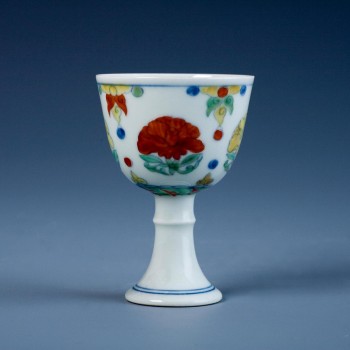
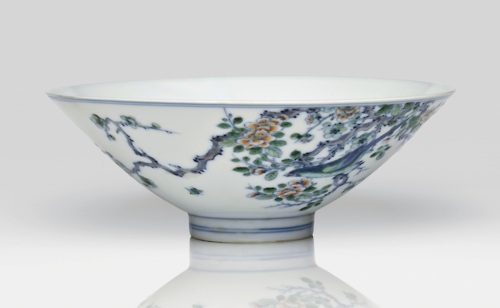
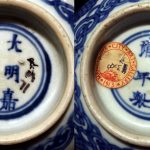
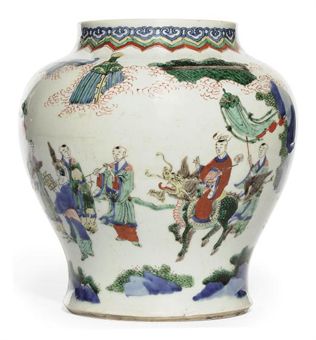
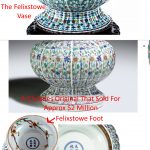
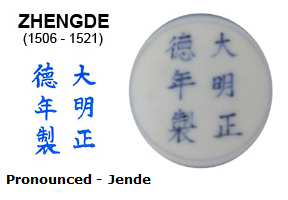
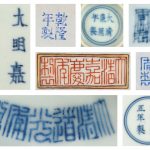
Many books on Chinese porcelain state that the Doucai palatte was first introduced in the reign of the emperor Chenghua, also most academic experts also believe this to be true, but it is not the case. Until the Zhushan Road excavations the doucai technique had been associated with the reign of the Chenghua emperor (reign 1465-1487) and, in particular, with the influence of the emperor’s consort, Wan Guifei. However, closer reading of history has shown Wall Guifei to have been a mercilessly cruel woman, with a taste for armour and fast horses, and an unlikely patron for fine porcelain.
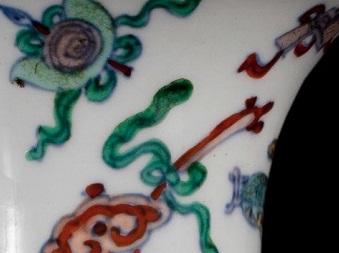 Many books on Chinese porcelain state that the Doucai palatte was first introduced in the reign of the emperor Chenghua, also most academic experts also believe this to be true, but it is not the case. Until the Zhushan Road excavations the doucai technique had been associated with the reign of the Chenghua emperor (reign 1465-1487) and, in particular, with the influence of the emperor’s consort, Wan Guifei. However, closer reading of history has shown Wall Guifei to have been a mercilessly cruel woman, with a taste for armour and fast horses, and an unlikely patron for fine porcelain.